An unannounced inspector can walk into your restaurant any day. This guide covers exactly what they check, what causes closures, and what to do if you fail — written for Edmonton restaurant owners.
An Alberta Health Services inspector can walk into your restaurant any day, without notice. They have full authority under the Public Health Act to assess your operation, document every violation they find, and post those findings publicly online — where they stay for three years.
Most restaurant owners don't fail because they're running a dirty kitchen. They fail because they didn't know the specific rules, the exact temperature numbers, or the particular things an inspector checks in the corners you haven't thought about in months.
This guide covers all of it — what they check, what shuts you down, and what to do if you fail.
By The Numbers
The exact figures every Edmonton restaurant owner must know
0Years
Inspection Reports Stay Publicly Visible
Posted on the AHS portal within 1–5 business days
0°C
Maximum Cold Holding Temperature
All refrigerated food must stay at or below this
0°C
Minimum Hot Holding Temperature
All hot food must stay at or above this during service
0°C
Minimum Poultry Cooking Temperature
Required internal temp for chicken, turkey, and duck
Who Does Health Inspections in Edmonton
All restaurant inspections in Edmonton are conducted by Alberta Health Services (AHS) Environmental Public Health — not the City of Edmonton, not a federal agency.
Inspectors operate under the Alberta Public Health Act and enforce two key documents:
- Alberta Food Regulation (Alta Reg 31/2006)
- Food Retail and Foodservices Code (last amended 2020)
Everything they check traces back to one of these two documents. They are not there to shut you down — their mandate is public safety and compliance. But they have full legal authority to close you immediately if they find conditions that pose a direct health risk.
The 4 Types of Inspections
There are four types. Only one of them gives you any notice:
- Routine / Monitoring — Unannounced. Happens roughly once per year for most restaurants. This is the standard inspection.
- Re-inspection — Triggered after violations are found. Comes to verify you fixed them.
- Initial / Approval — Before you open, or when ownership changes. The only one that's coordinated in advance.
- Complaint / Demand — Triggered by a public complaint. No schedule. Can happen any day.
Restaurants with a clean history get inspected roughly once a year. Restaurants with repeated violations get inspected more often — AHS adjusts frequency based on risk.
“
The only way to be ready for an unannounced inspection is to always be ready.
What Inspectors Actually Check
Inspectors follow a structured checklist across eight categories every time. Use this as your complete reference.
1. Food Temperature Control
This is where inspectors spend the most time. Foodborne illness almost always traces back to a temperature failure.
- Cold holding: all refrigerated food must be at 4°C or below at all times
- Hot holding: all hot food must stay at 60°C or above during service
- Poultry must reach a minimum internal cooking temperature of 74°C
- Cooling: hot food must drop from 60°C to 20°C within 2 hours, then reach 4°C within 4 more hours
- Thawing: only three methods are legal — in the refrigerator, under cold running water, or in a microwave if cooking immediately after
- Thermometers must be present, calibrated, and accurate
2. Food Storage
- Raw meat must always be stored below ready-to-eat food — raw chicken goes on the bottom shelf, always
- All food must be stored at least 15 cm (6 inches) off the floor
- Containers must be covered and labeled with use-by dates
- First In, First Out (FIFO): older stock is used before newer stock
- No food stored near chemicals, cleaners, or janitorial supplies
- All food must come from approved, licensed suppliers
3. Employee Hygiene
- Handwashing: minimum 20 seconds with soap and water — required after handling raw meat, using the washroom, taking out garbage, touching your face, handling money, or returning from a break
- Handwashing stations must be in every food prep area, accessible at all times, stocked with soap and paper towels
- Disposable gloves required for ready-to-eat food — changed when switching tasks
- Hair coverings (hats or hairnets) required
- Any employee showing symptoms — vomiting, diarrhea, jaundice — must not handle food
4. Cross-Contamination Prevention
- Separate cutting boards for raw meat and produce — colour coding is best practice
- Raw meat and ready-to-eat food must never share prep surfaces without full sanitation between uses
- Hands and gloves must be changed when switching between raw and cooked product
- Utensils must be washed, rinsed, and sanitized between uses on different food types
5. Cleaning and Sanitizing
- All food contact surfaces require three steps in order: wash → rinse → sanitize
- Sanitizer must be at the correct concentration — inspectors test it with chemical test strips on the spot
- Cleaning chemicals must be stored separately from food, in labelled containers
- Mop sinks and janitorial supplies must be completely separated from food handling areas
6. Facility Condition and Ventilation
- Floors, walls, and ceilings must be smooth, durable, and easy to clean
- Lighting must be adequate in all food prep areas — burned-out bulbs are a citable violation
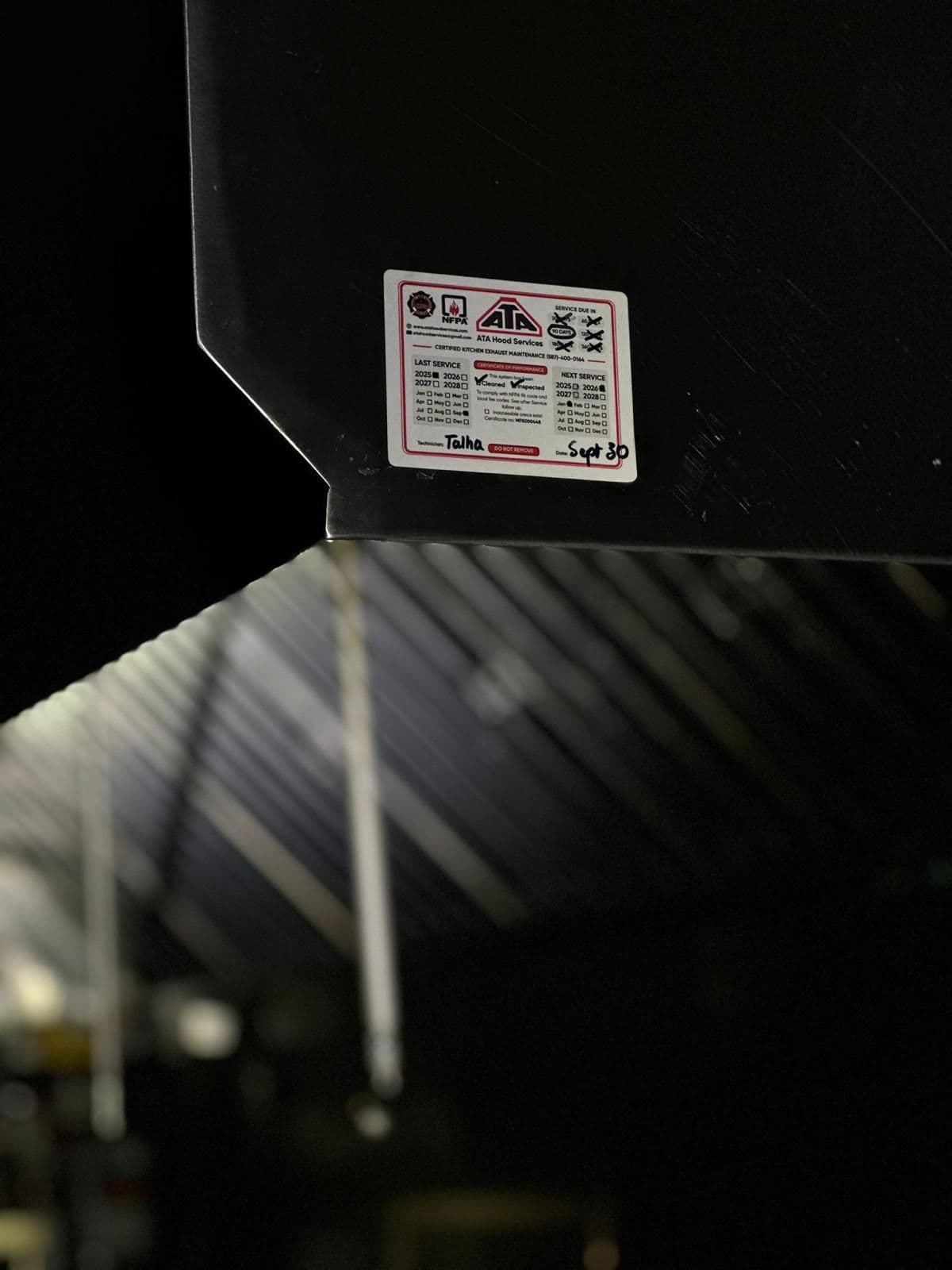
- Your exhaust hood system must be functional and maintained — a grease-saturated hood or clogged filters is a direct violation and signals a fire risk to any inspector who sees it. Professional kitchen exhaust cleaning keeps your system within NFPA 96 requirements and gives you a valid service certificate to show on demand.
- Hot water must be available at all sinks
- Equipment must be in good working order — cracked, corroded, or damaged surfaces that trap bacteria are a violation
7. Pest Evidence
- Zero tolerance: no droppings, live insects, rodent tracks, or nesting material anywhere in the facility
- Inspectors check behind and under equipment, under sinks, and around pipe penetrations
- Garbage must be in covered containers and removed regularly
- Any pesticide use must be documented and approved for commercial food premises — consumer-grade bug spray is not acceptable
8. Certifications and Legal Compliance
- At least one certified food handler must be on-site when 6 or more food handlers are working at the same time
- Your food establishment permit must be current, issued by AHS, and posted visibly
- Required signage must be posted: no-smoking, handwashing reminder, food establishment permit, allergy information
- Inspectors may ask to see cleaning logs, temperature monitoring records, or your food safety plan
🚨
The Two Temperatures Every Alberta Restaurant Must Know
Cold holding — 4°C or below. Hot holding — 60°C or above. Food sitting between these two temperatures is in the danger zone where bacteria multiply rapidly. Inspectors check this first, every single time.
Critical vs Non-Critical Violations
Not all violations are equal. This distinction determines whether you walk out of an inspection still open for business or handed a closure order on the spot.
Critical violation: A condition that poses a direct, immediate risk to public health. These can trigger immediate closure. No negotiation.
Non-critical violation: A condition that doesn't pose an immediate health risk but violates the code. You can usually stay open while correcting these — but they are still documented and go on your public record.
The rule of thumb: if it can make a customer sick today, it's critical. The table below shows you exactly how the two categories compare.
`Critical Violation`
✗Can trigger immediate closure with no prior warning
✗Poses a direct, immediate risk to public health right now
✗Food held at the wrong temperature (hot or cold)
✗Active pest infestation — droppings, live insects, rodent tracks
✗No accessible handwashing station during service
✗Raw meat stored above ready-to-eat food in the walk-in
✗Food from an unapproved or unlicensed supplier
✗Re-inspection scheduled within days, not weeks
`Non-Critical Violation`
✓You can stay open while correcting it
✓Does not pose an immediate public health risk today
✓A burned-out light bulb in a prep area
✓Minor labelling issue on a food container
✓Equipment slightly worn but still functional and cleanable
✓Cleaning log not fully completed
✓Permit posted in wrong location
✓Still documented publicly — do not treat these as unimportant
The 8 Most Common Violations in Edmonton Restaurants
These appear repeatedly in AHS inspection reports. Know them before an inspector does.
1. Food held at the wrong temperature
Refrigerators running slightly warm, hot-hold units not preheated before service, food left out during prep longer than permitted. Check equipment temperatures at the start of every single shift.
2. Raw meat stored above ready-to-eat food
Raw chicken dripping onto salad greens in the walk-in. One of the fastest routes to a foodborne illness outbreak. Label your shelves. Train everyone who touches the walk-in — not just your main kitchen staff.
3. Inadequate handwashing — facility or practice
Two separate violations. Structural: sinks blocked by equipment, no soap, no paper towels. Behavioral: staff not washing at the right moments. Both are cited regularly and both are preventable.
4. Evidence of pest activity
A single dropping behind the fryer. A mouse track along the wall. Any evidence triggers a critical violation and usually a re-inspection within days. Pest prevention is not a reactive task.
5. Food from unapproved sources
Buying from unlicensed suppliers, accepting unmarked product. Inspectors check invoices and product labels.
6. Improper cleaning and sanitizing
Surfaces wiped but not sanitized. Sanitizer at the wrong concentration. Cutting boards with deep knife scarring that can no longer be properly cleaned.
7. Hood and ventilation not maintained
Grease buildup in the hood system and ductwork is both a fire hazard and a health code violation. Inspectors look for visible grease saturation and ask for your last service certificate. A neglected hood signals that other systems may be neglected too — it sets the tone for the entire inspection.
8. No certified food handler on premises
Catches restaurants off guard when the certified staff member calls in sick. Build redundancy — more than one person on your team should hold certification.
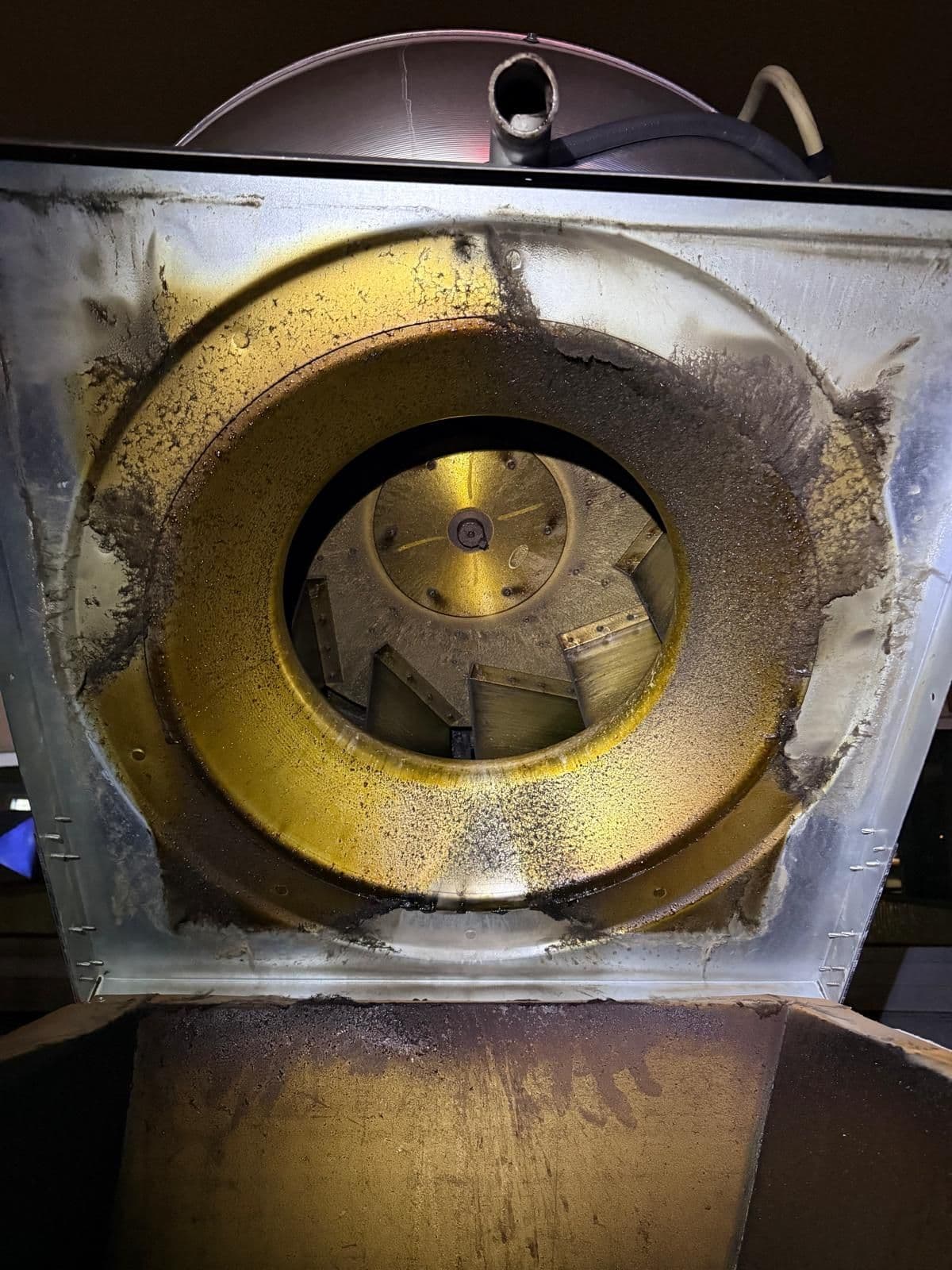
Non-Compliant Exhaust Fan
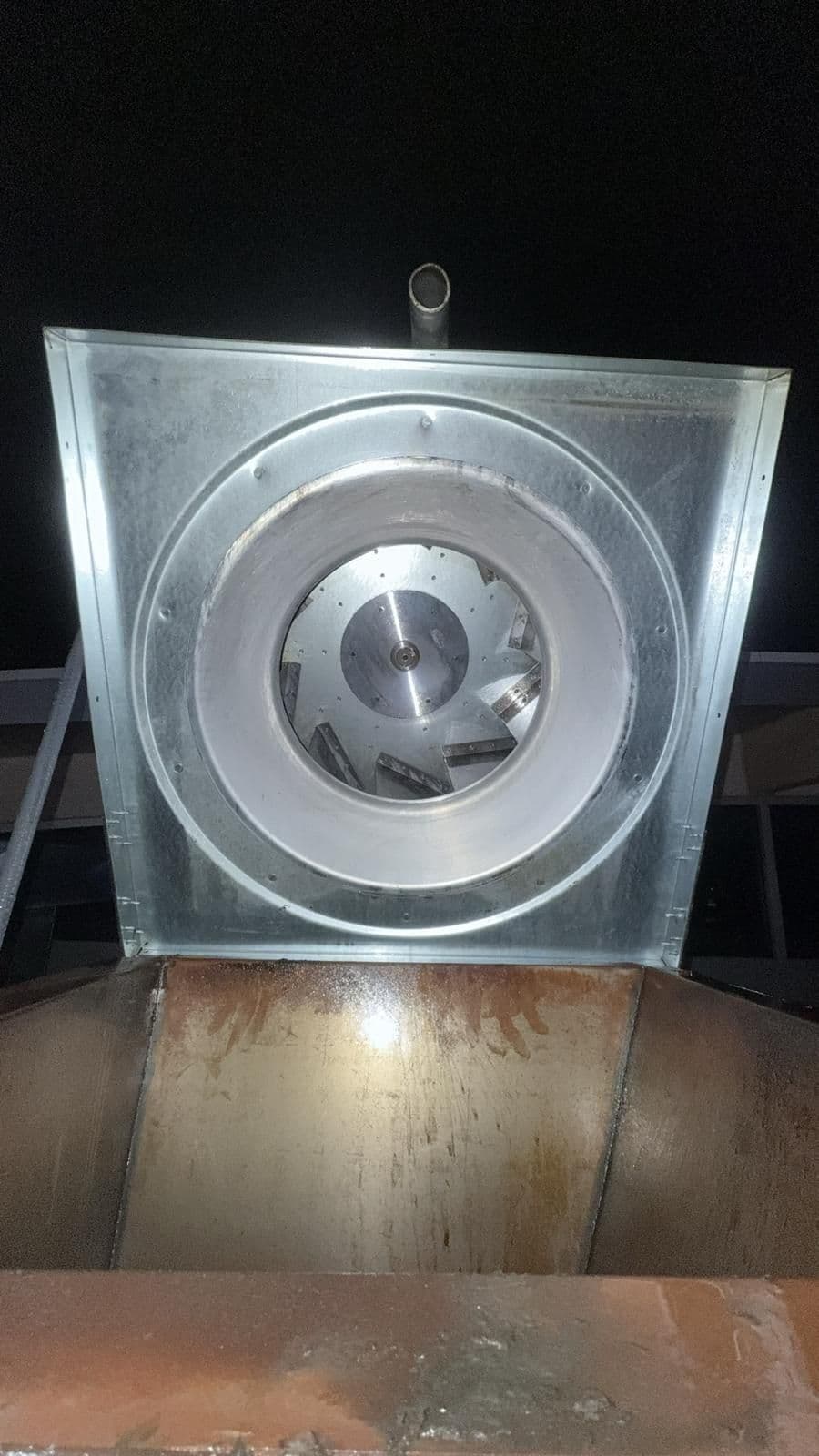
Inspection Ready Exhaust Fan
A visually saturated kitchen exhaust fan is a citable violation and tells the inspector everything they need to know about how the kitchen is run. One before/after visit changes that.
The Enforcement Process
Failing an inspection doesn't always mean immediate closure. What happens next depends on what was found — and how you respond. Here is the full escalation ladder, from a first conversation to prosecution.
1
Education
Inspector explains the violation and what's required to fix it. First-time or minor issues typically end here with a conversation and a follow-up date. Most restaurants never go past this step.
2
Written Notice
Violation is formally documented and given to the operator in writing. A correction deadline is set. This is now on your record.
3
Re-Inspection
Inspector returns to verify corrections were made. If they weren't — or if the violations are serious — enforcement escalates immediately.
4
Closure Order
AHS issues a written order to close until violations are corrected. This closure becomes public record and is visible on the AHS inspection portal.
5
Permit Suspension or Revocation
Your food establishment permit is suspended or revoked. You cannot legally operate.
6
Prosecution
Under the Public Health Act, violations can result in prosecution of the owner, manager, and individual employees. Fines can reach tens of thousands of dollars per offence.
⚠️
Your Inspection Report Is Public — And Stays Online for 3 Years
Every violation AHS documents is posted on the Alberta Health Services public portal within 1 to 5 business days. It stays there for three years. Customers Google restaurants before they book. That report is findable. One bad inspection can follow your restaurant for three years — not because of one bad day, but because it is publicly documented. Consistent compliance is reputation management.
What To Do After a Failed Inspection
The inspection happened. The violations are documented. Here is the exact order of operations to recover fast, pass the re-inspection, and protect your reputation while you fix the problem.
1
Read the full report (Day 1)
Understand every violation — what it is, whether it's critical or non-critical, and exactly what it requires. If anything is unclear, call your AHS inspector and ask them to explain it specifically. Do not guess.
2
Fix all critical violations immediately (Days 1–3)
Critical violations are your only priority right now. Fix them, document the fix with photos and written notes, and confirm the correction is in place before the next shift opens.
3
Brief your entire team (Days 1–7)
Not just the people on shift the day of the inspection. Every violation that involves staff behavior requires formal retraining. Keep a written record that you did it — date, who attended, what was covered.
4
Build your corrective action plan (Days 1–14)
For every violation: who is responsible for fixing it, what the fix is, and a clear deadline. This document shows the inspector you took the failure seriously and have a structured response. Bring it to the re-inspection.
5
Request your re-inspection (Days 14–30)
Contact AHS once all corrections are complete. The inspector decides the exact timing, but requesting promptly demonstrates good faith. Have your corrective action plan ready to present.
6
Run weekly self-audits going forward (Ongoing)
The only restaurants that never worry about inspections are the ones that treat compliance as a daily standard, not a test to pass. See the checklist below.
How To Self-Audit Before They Show Up
The most inspection-ready kitchens treat every week like an inspector is coming. The three checklists below take less than 15 minutes a day and cover everything AHS checks. Use them, print them, or bookmark this page and run through them on shift.
Daily — Start of Every Shift
Run this before service opens. Takes under 5 minutes.
0/6
Weekly
Pick one consistent day — end of week works well.
0/5
Monthly
Set a recurring calendar reminder. These are the violations that blindside restaurants.
0/5
Frequently Asked Questions
QCan I ask an AHS inspector to leave my restaurant?+
No. Alberta Health Services inspectors have the authority to enter any food establishment at any reasonable time under the Public Health Act. Refusing entry or obstructing an inspector is itself a violation and will escalate enforcement immediately.
QHow do I find my restaurant's inspection reports online?+
Search your restaurant name on the Alberta Health Services public inspection portal at "albertahealthservices.ca". Reports are posted within 1–5 business days of the inspection and remain visible for three years.
QDo I get any warning before a routine inspection?+
No. Routine monitoring inspections are unannounced by design. The only inspection with advance notice is the initial approval inspection before opening.
QWhat happens if the same violation appears in two inspections in a row?+
Repeated violations significantly increase your risk of escalated enforcement — including closure orders and permit action. AHS uses your inspection history to determine both how often you get inspected and how aggressively they respond.
QHow often does my hood system need to be professionally cleaned?+
Cleaning frequency is set by NFPA 96 and depends on your cooking type. High-volume frying: quarterly. Standard restaurant cooking: every 6 months. Low-volume or low-heat operations: annually. Your cleaning company must provide a certificate after each service — keep it on file. Inspectors ask for it.
QIs one certified food handler enough for my whole restaurant?+
Alberta Food Regulation requires at least one certified food handler on-site when six or more food handlers are working simultaneously. Having only one certified person is a risk — if they call in sick and you have six or more staff on shift, you're in violation. Train multiple people.
QWhat's the difference between a food handling permit and food handler certification?+
The food handling permit belongs to your business — it's your licence to operate, issued by AHS. Food handler certification belongs to individual employees — it's the personal training credential. You need both.
QMy inspector cited a violation I disagree with. What can I do?+
Contact the inspector who performed the inspection first — some violations come from a misunderstanding that can be resolved directly. For formal disputes, AHS has an internal review process. You cannot prevent the violation from being posted publicly while a review is pending.
Keep Your Hood Compliant. Keep Your Certificate Current.
Your exhaust hood is one of the specific things AHS inspectors check — and one of the most commonly cited violations in Edmonton restaurants. A professional cleaning every 6 months (or quarterly for high-volume frying) keeps you NFPA 96 compliant, gives you a valid certificate to show on demand, and eliminates one more item from your inspection checklist permanently.
If your restaurant's circuit breaker trips more than once a month, it's not a nuisance — it's a warning. This guide covers the 5 real causes of repeated breaker trips in commercial kitchens, how to tell a harmless overload from an active fire risk, and exactly when to call an electrician versus when to look at your equipment.
Most Edmonton restaurants are violating NFPA 96 without knowing it. This guide explains exactly what the standard requires, how your cooking type determines your cleaning schedule, and why your insurer will check your certificate the moment you make a fire claim.